
Labora Diamonds
Diamond Education
Know What You’re Wearing
Diamonds are beautiful.
Understanding them should be simple.
From how lab-grown diamonds are created to the 4Cs, certification, sustainability and jewellery care, here’s everything worth knowing before choosing yours.
01 — Lab-Grown Diamonds
Grown Differently. Diamond Nonetheless.
A lab-grown diamond is a diamond created in a controlled laboratory environment rather than formed naturally beneath the Earth’s surface.
It has the same fundamental crystal structure as a diamond: carbon atoms arranged in a diamond crystal lattice.
The essential difference is origin.
Natural diamonds are formed through geological processes over extremely long periods of time and are recovered from the Earth.
Lab-grown diamonds are created using technology that recreates the conditions required for diamond crystal growth.
How Are Lab-Grown Diamonds Created?
There are two principal methods used to create lab-grown diamonds.
CVD
Chemical Vapour Deposition
CVD begins with a thin diamond seed placed inside a specialised chamber. Carbon-rich gases are introduced and activated under controlled conditions, allowing carbon atoms to gradually build upon the seed and form a diamond crystal.
HPHT
High Pressure High Temperature
HPHT recreates the high-pressure and high-temperature conditions associated with diamond formation. A small diamond seed is exposed to intense heat and pressure, allowing carbon material to crystallise around it.
Lab-Grown vs Natural Diamonds
The simplest distinction is this:
Natural diamonds come from the Earth.
Lab-grown diamonds come from a laboratory.
Both can be evaluated according to characteristics such as cut, colour, clarity and carat weight.
Their origins, production processes, rarity, market dynamics and resale behaviour are different.
At Labora Diamonds, we believe customers should understand that difference clearly rather than being sold an oversimplified comparison.
Are Lab-Grown Diamonds Real Diamonds?
Yes.
Lab-grown diamonds should not be confused with diamond simulants such as cubic zirconia.
A simulant resembles the appearance of a diamond but is made from a different material.
A lab-grown diamond is diamond material created through a different process of formation.
Why Lab-Grown Diamonds at Labora Diamonds?
Because they fit the way we believe diamonds should be experienced.
We believe everyone deserves diamonds — and that diamonds shouldn’t spend most of their lives waiting inside a jewellery box.
They should be worn.
On important days.
On ordinary days.
As gifts.
As reminders.
And simply because you wanted one.
Lab-grown diamonds allow Labora Diamonds to build a more contemporary relationship with diamond jewellery — one centred on personal style, repeat wear and enjoying the pieces you choose.
That is what we mean by:
Luxury to Live In.
Discover Labora Diamonds02 — The 4Cs of Diamonds
Four Letters. A Better Way to Understand Your Diamond.
Every diamond has its own combination of characteristics.
The traditional framework used to describe many of those characteristics is known as the 4Cs:
Cut. Colour. Clarity. Carat.
No single C tells the whole story.
Think of them as four parts working together to shape how a diamond looks, feels and is valued.
CUT
How a Diamond Handles Light
Cut is often confused with diamond shape.
They are not the same thing.
Shape describes the outline of a diamond: round, oval, pear, emerald and so on.
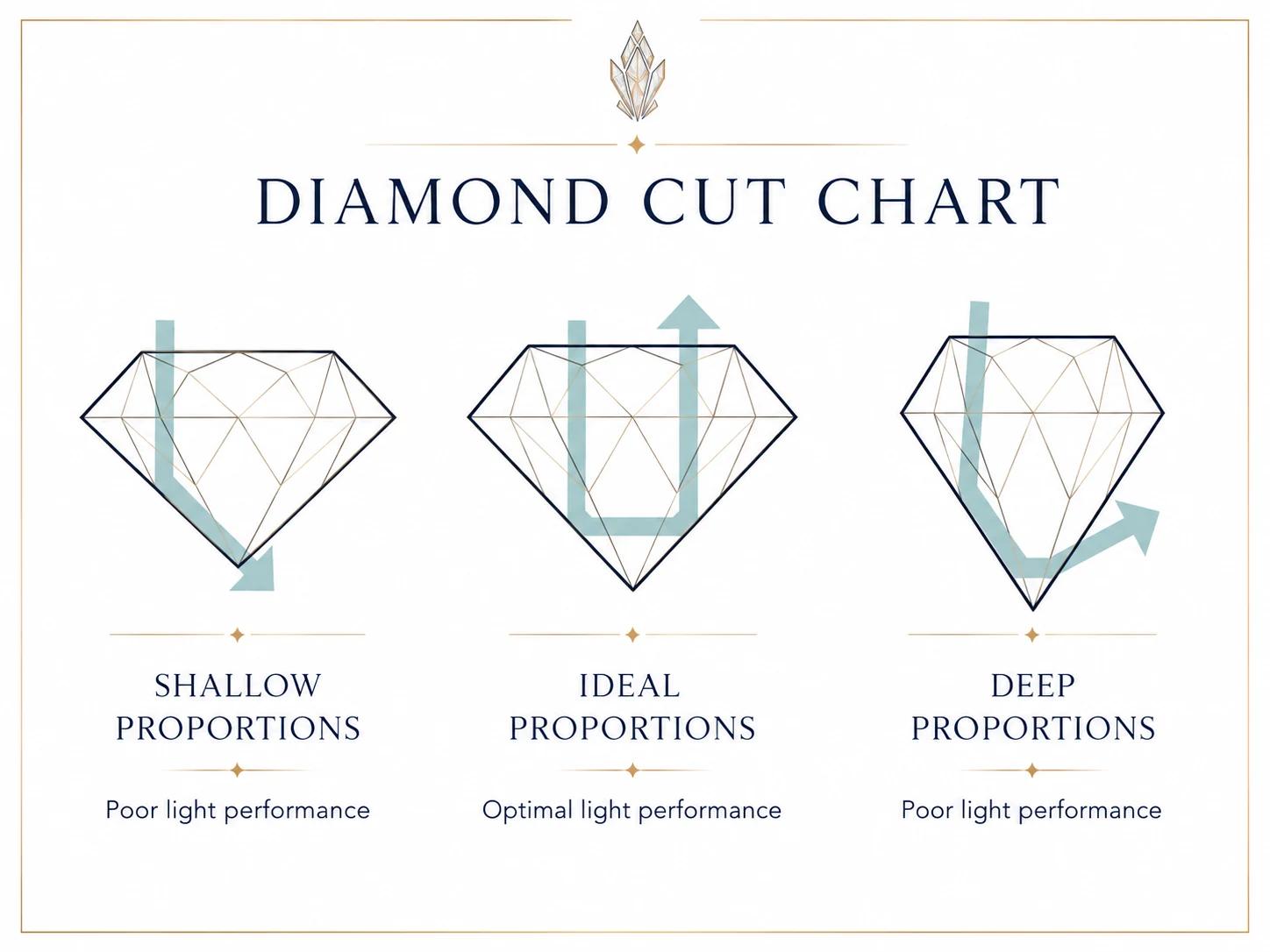
Cut relates to how a diamond’s proportions, symmetry and polish influence the way it interacts with light.
A well-cut diamond can reflect and return light effectively, contributing significantly to its visual appearance.
When choosing a diamond, carat weight may tell you how much it weighs. Cut helps determine how brilliantly that diamond performs.
Labora Diamonds Tip
When comparing diamonds, don’t look at size alone.
Pay attention to how the diamond looks when it moves.
COLOUR
Sometimes, Less Colour Means a Higher Grade
For diamonds graded on the commonly used D-to-Z scale, colour grades describe the degree to which noticeable colour is present.
The scale begins at:
D — Colourless
and continues through increasing levels of detectable colour toward Z.
Differences between neighbouring grades can be subtle and may not always be obvious without controlled viewing conditions.
The best choice depends on the diamond, setting, metal colour, design and personal preference.
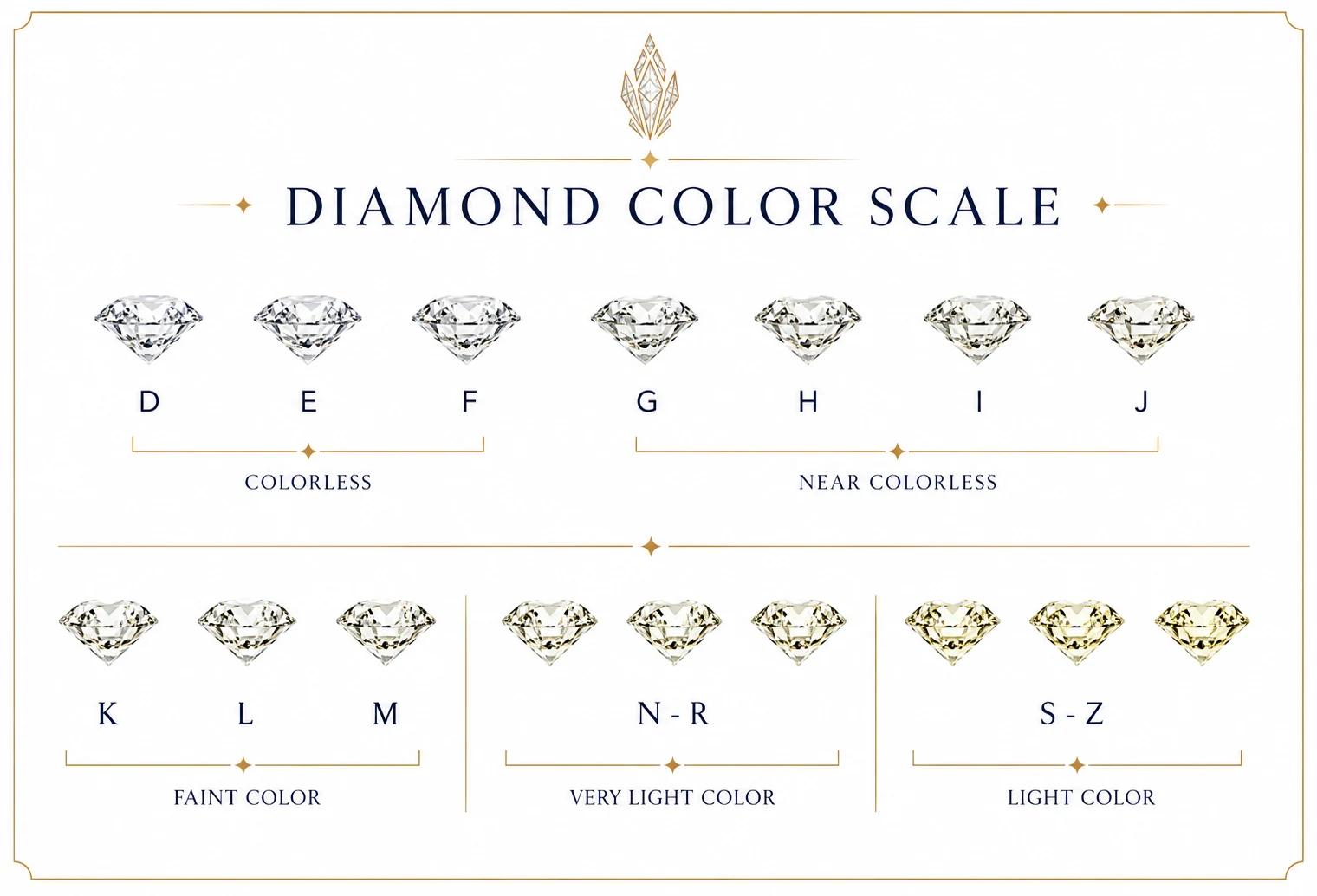
| Group | Overview | Grades |
|---|---|---|
| Colourless | No detectable colour to the naked eye | D–F |
| Near Colourless | Slight warmth that is rarely noticeable to the naked eye | G–J |
| Faint Colour | Subtle tint visible to the naked eye in most lighting | K–M |
| Very Light Colour | Noticeable yellow, brown, grey, or pink tint in most lighting | N–R |
| Light Colour | Strong, clearly visible tint | S–Z |
Labora Diamonds Tip
A grading letter matters.
So does how the finished jewellery actually looks on you.
CLARITY
Every Diamond Has a Story Under Magnification
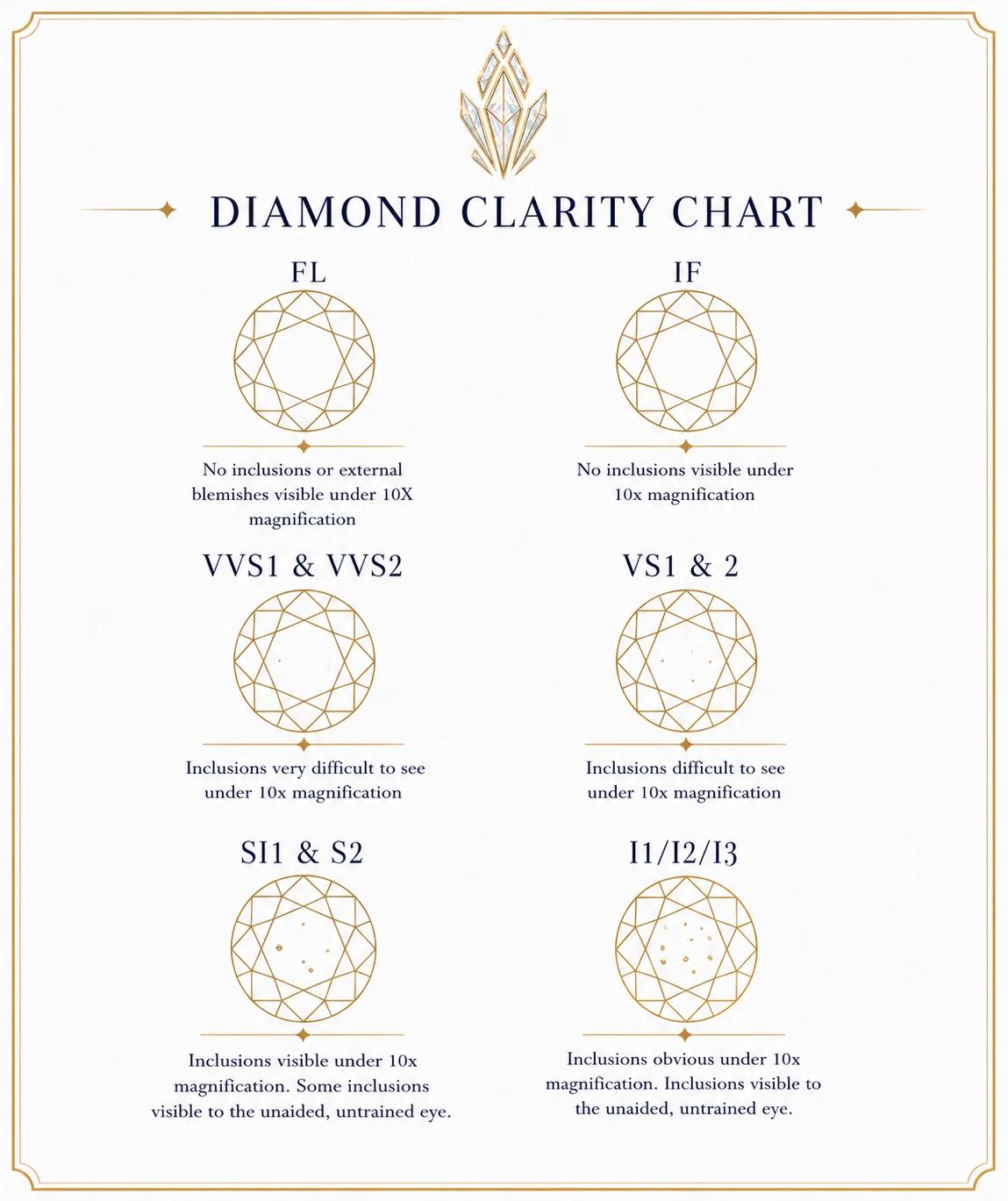
Clarity describes characteristics found within or on the surface of a diamond.
Internal characteristics are generally called inclusions.
External characteristics are generally called blemishes.
Diamonds are examined under controlled conditions and assigned clarity grades based on factors including the size, number, position and visibility of these characteristics.
Higher clarity does not automatically mean a diamond will appear dramatically different to the naked eye.
Labora Diamonds Tip
The goal isn’t always the highest grade.
It is finding the right balance of appearance, specifications and value for the piece you want.
CARAT
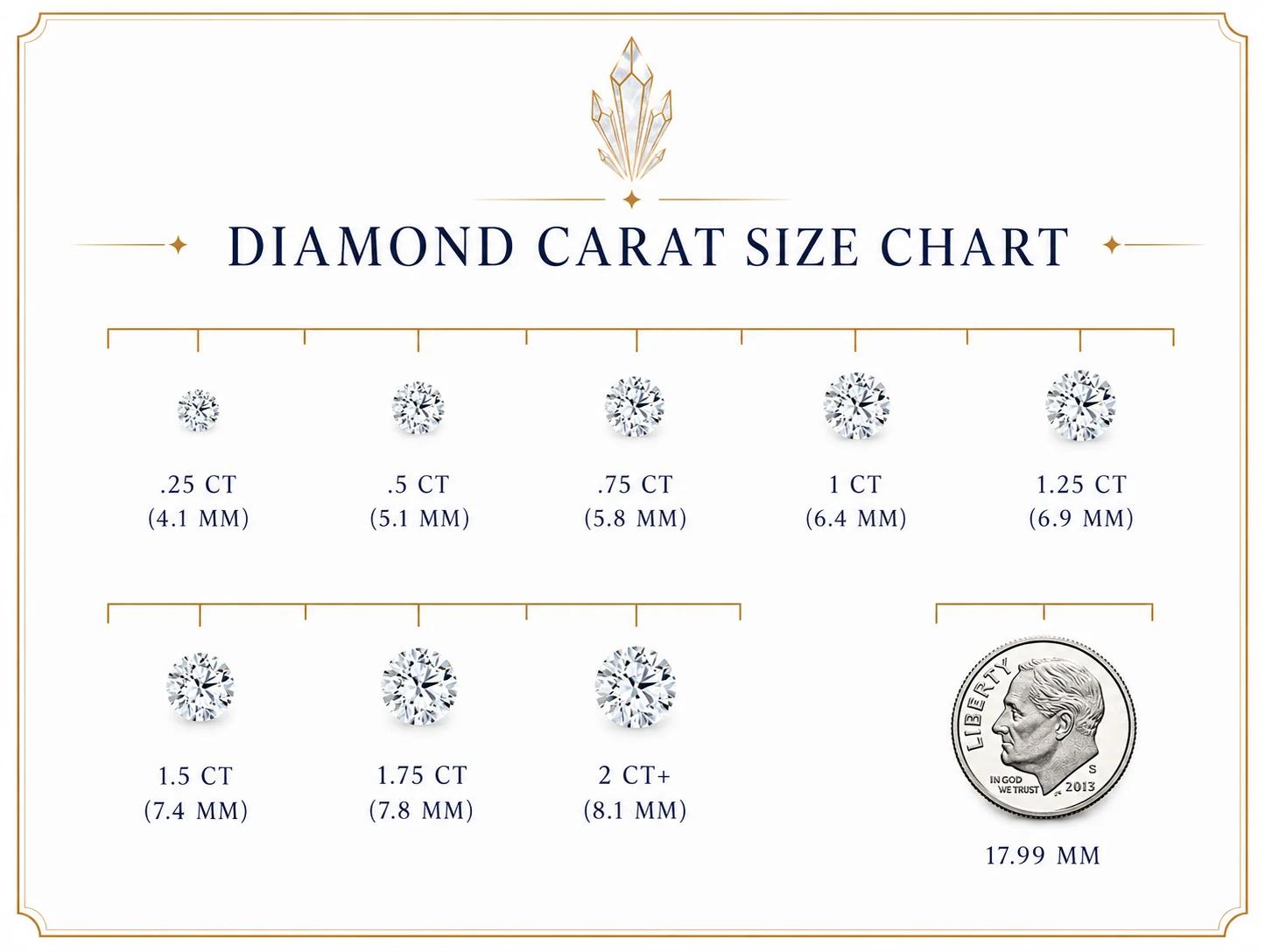
Weight, Not Size
Carat measures the weight of a diamond.
1 carat = 200 milligrams.
But carat weight and visible size are not exactly the same thing.
Two diamonds with the same carat weight can appear different in size depending on their shape, proportions and how their weight is distributed.
That means a larger carat number does not automatically equal a better-looking diamond.
Labora Diamonds Tip
Choose the diamond that looks right, not simply the number that sounds impressive.
The 4Cs Work Together
There is no universally perfect combination.
A beautiful diamond comes from the relationship between its characteristics and the design in which it is set.
That is why diamond buying should not feel like chasing four maximum numbers.
It should feel like understanding what matters most to you.
Explore Our Diamonds03 — Diamond Certification
Certified. Transparent. Made to be trusted.
At Labora Diamonds, we believe everyone deserves to know exactly what they are buying. Independent diamond certification provides an expert assessment of a diamond’s quality and characteristics, including its cut, colour, clarity, and carat weight.
Depending on the diamond selected, our diamonds may be accompanied by grading reports from recognised gemological laboratories, giving you greater transparency and confidence in your purchase.

GIA
Gemological Institute of America
Founded in 1931, the Gemological Institute of America (GIA) is one of the world’s most respected authorities in gemology. GIA established the globally recognised 4Cs of diamond quality — Cut, Colour, Clarity, and Carat Weight — which became a universal framework for understanding diamond quality.
GIA also assesses laboratory-grown diamonds, providing independent information about their quality and characteristics.
Why it matters: Globally recognised standards, rigorous assessment, and exceptional credibility.

IGI
International Gemological Institute
Founded in 1975, the International Gemological Institute (IGI) is a leading gemological organisation with an extensive international presence and a particularly strong role in the laboratory-grown diamond market.
IGI grading reports provide detailed information about a laboratory-grown diamond’s carat weight, colour, clarity, cut, proportions, and other identifying characteristics, helping customers understand the diamond they are purchasing.
Why it matters: International recognition, extensive lab-grown diamond expertise, and detailed grading reports.

HRD Antwerp
Antwerp World Diamond Centre
Based in Antwerp, Belgium — one of the world’s historic diamond trading centres — HRD Antwerp is an internationally recognised diamond grading organisation providing laboratory services for diamonds and jewellery.
HRD Antwerp evaluates diamond characteristics using established grading standards and provides reports designed to give buyers clear and independent information about the quality and identity of their diamonds.
Why it matters: Antwerp diamond heritage, international recognition, and independent diamond assessment.

SGL
Solitaire Gemological Laboratories
SGL (Solitaire Gemological Laboratories) provides independent diamond and jewellery grading and certification services, with a significant presence across India and other international markets.
SGL evaluates both natural and laboratory-grown diamonds and provides reports detailing important characteristics such as carat weight, colour, clarity, cut, and other identifying features.
Why it matters: Independent grading, strong presence in the Indian market, and detailed diamond assessment.
Your Diamond, Explained on Paper.
A diamond grading report provides an independent assessment of a diamond’s characteristics.
Depending on the grading laboratory and the diamond being examined, a report may contain information such as:
- Carat weight
- Colour grade
- Clarity grade
- Cut information
- Measurements
- Proportions
- Polish
- Symmetry
- Fluorescence
- Diamond type or growth origin
- Report number
Think of it less as a certificate of beauty and more as a technical record of the diamond being evaluated.
Why Does Diamond Certification Matter?
When purchasing diamond jewellery, clear grading information can help you understand what you are paying for.
It allows customers to compare characteristics using recognised terminology rather than relying only on descriptions such as “premium”, “high quality” or “excellent diamond”.
At Labora Diamonds, we believe diamond information should be understandable.
Not intimidating.
Does Certification Mean One Diamond Is Better Than Another?
Not necessarily.
A grading report documents characteristics.
It does not decide which diamond you will personally find most beautiful.
Two diamonds can have similar grades while looking different because of their proportions, shape, cut quality or other visual characteristics.
Certification is therefore one part of informed diamond buying — not the entire decision.
What Should I Check on a Diamond Report?
Carat
How much the diamond weighs.
Colour
Its assigned colour grade.
Clarity
Its assessed internal and external characteristics.
Cut / Proportions
Information relating to the diamond’s geometry and finish, where applicable.
Measurements
The diamond’s physical dimensions.
Report Number
A unique identifier associated with the grading report.
Then compare those specifications with the actual piece.
Because numbers help you understand a diamond.
They shouldn’t stop you from looking at it.
Learn About the 4Cs04 — Sustainability
Understanding the Bigger Picture
Sustainability in jewellery is more complex than a single material or production method.
Lab-grown diamonds are created in controlled environments rather than recovered through traditional diamond mining. Their environmental footprint can vary depending on factors such as the production process, energy source, manufacturing practices and supply chain.
At Labora Diamonds, we believe understanding those differences matters.
Making a thoughtful jewellery choice can involve looking beyond the diamond itself — at the materials used, how a piece is made, how it is packaged, and how it is cared for throughout its life.
For us, sustainability begins with better information and greater transparency.
Because making considered choices starts with understanding what you choose.
Discover Our Approach05 — Jewellery Care
Wear It Often. Care for It Well.
Labora Diamonds jewellery is meant to leave the jewellery box.
That means coffee runs.
Workdays.
Dinner reservations.
Flights.
Celebrations.
And ordinary Wednesdays.
A little care can help keep your jewellery looking its best along the way.
Everyday Care
Put Jewellery On Last
Apply perfumes, lotions, cosmetics and hair products before putting on your jewellery where possible.
This can help reduce unnecessary product build-up on diamonds and metal surfaces.
Take It Off When Things Get Rough
Consider removing jewellery before activities that could expose it to impact, abrasion or harsh chemicals.
That may include:
- Gym workouts
- Heavy household cleaning
- Swimming
- Contact sports
- Gardening
- Manual work
Your jewellery is made to be worn.
It does not need to attend every activity with you.
Cleaning Diamond Jewellery
Over time, oils, lotions and everyday residue can collect around a diamond and reduce its visible sparkle.
For many jewellery pieces, gentle cleaning with lukewarm water, mild soap and a soft brush may help remove surface build-up.
Avoid aggressive scrubbing.
Rinse carefully and dry with a soft, lint-free cloth.
For jewellery containing additional gemstones, delicate finishes or specialised settings, care requirements may differ.
For product-specific advice, contact Labora Diamonds before cleaning.
What Should I Avoid?
Avoid exposing jewellery unnecessarily to:
- Harsh household chemicals
- Chlorine
- Abrasive cleaning products
- Extreme impact
- Rough surfaces
- Unverified jewellery-cleaning solutions
Do not assume every jewellery cleaner is appropriate for every metal, gemstone or finish.
How Should I Store My Jewellery?
Give every piece a little space.
Jewellery can scratch other jewellery, and diamonds are particularly hard materials.
Store pieces individually or in separate compartments wherever possible.
Chains should ideally be stored carefully to reduce tangling.
And yes:
We know we normally tell you to take your diamonds out of the jewellery box.
They may return there occasionally.
Check Your Jewellery
Settings, clasps and chains experience normal wear over time.
Periodically inspect your jewellery for:
- Loose stones
- Bent prongs
- Damaged clasps
- Distorted settings
- Worn links
- Unusual movement
If something feels wrong, stop wearing the piece until it has been inspected.
Professional Cleaning & Care
A Little Care Goes a Long Way
Even jewellery made to be worn often deserves a little attention from time to time.
We recommend having your jewellery periodically inspected by a professional, particularly pieces you wear frequently.
An inspection can help identify loose settings, worn components or other signs of everyday wear before they become bigger concerns.
If you notice a loose stone, damaged clasp, bent setting or any unusual movement in your jewellery, we recommend removing the piece and having it inspected before wearing it again.
For questions about cleaning, repairs, resizing or caring for your Labora Diamonds jewellery, our team is here to help.
Contact UsOne Simple Rule
Wear your jewellery.
Just don’t forget to look after it.
Diamonds are meant to collect memories.
Not dust.
Know More. Choose Better. Wear More.
You don’t need to become a gemologist to choose jewellery you love.
You just deserve enough information to make the decision confidently.
Learn what matters.
Choose what feels right.
Then do the most important thing:
Wear the diamonds.
Labora Diamonds
Everyone Deserves Diamonds.